Blog / Comparison
Nexus vs LiteLLM: choosing the right provider
Run it yourself, or own it without running it.
LiteLLM is an open-source proxy that a platform team hosts and operates. It is powerful and flexible, and it puts the work of running a gateway on your infrastructure team. Nexus gives a company its own AI gateway, with interfaces for everyone, without making anyone run it, and runs privately when your data must stay in.
| Item | Nexus | LiteLLM |
|---|---|---|
| Best for | Mid-sized companies | Infrastructure teams |
| How it runs | Managed by us, or Private in your cloud | You host and operate it |
| Where people work | Web, desktop, mobile, Slack, CLI, API | API and an admin console |
| Control | Nested units, budgets, model rules | Per key or team |
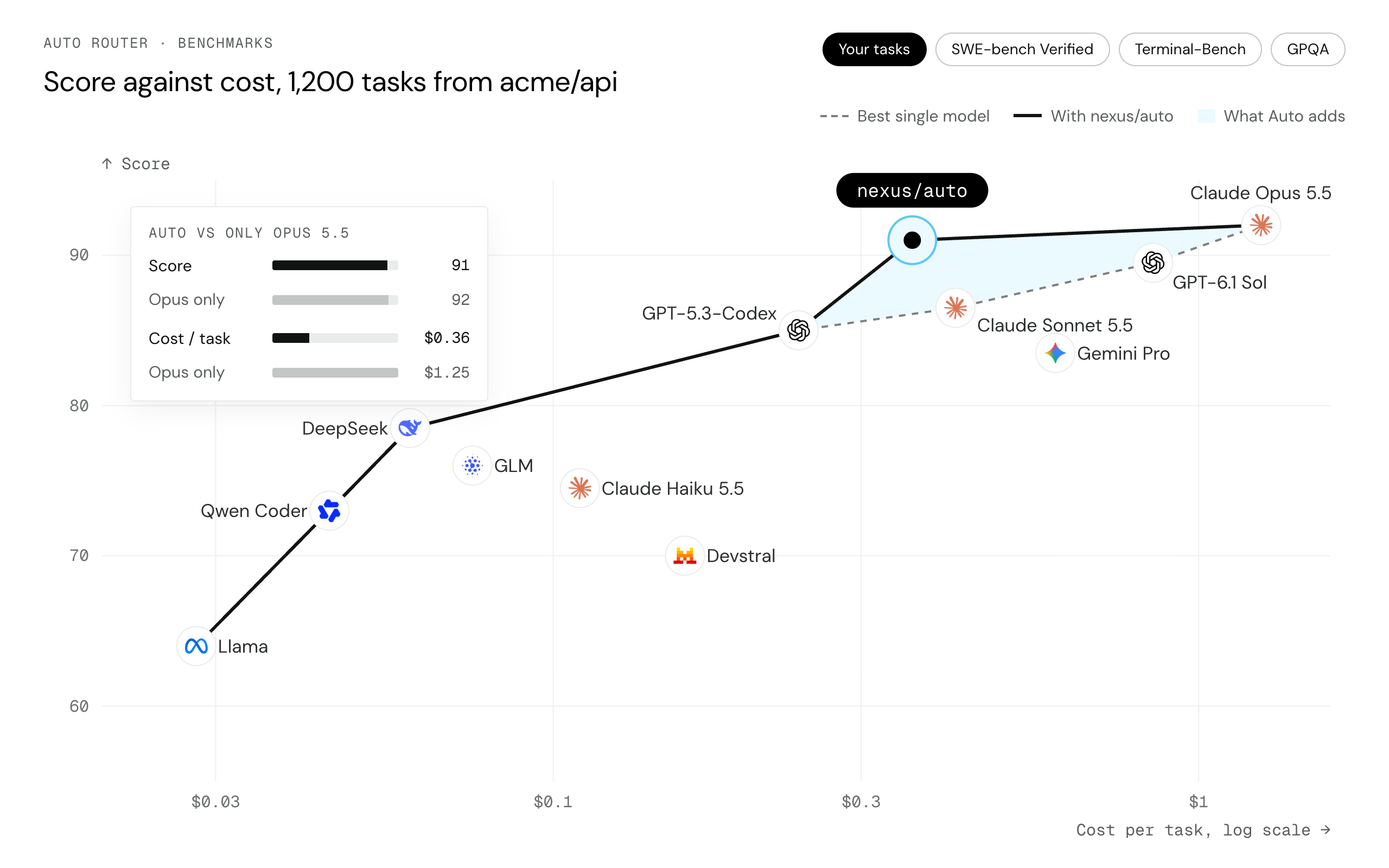
| Picking the model | Auto, by task, inside your rules | Rules you write |
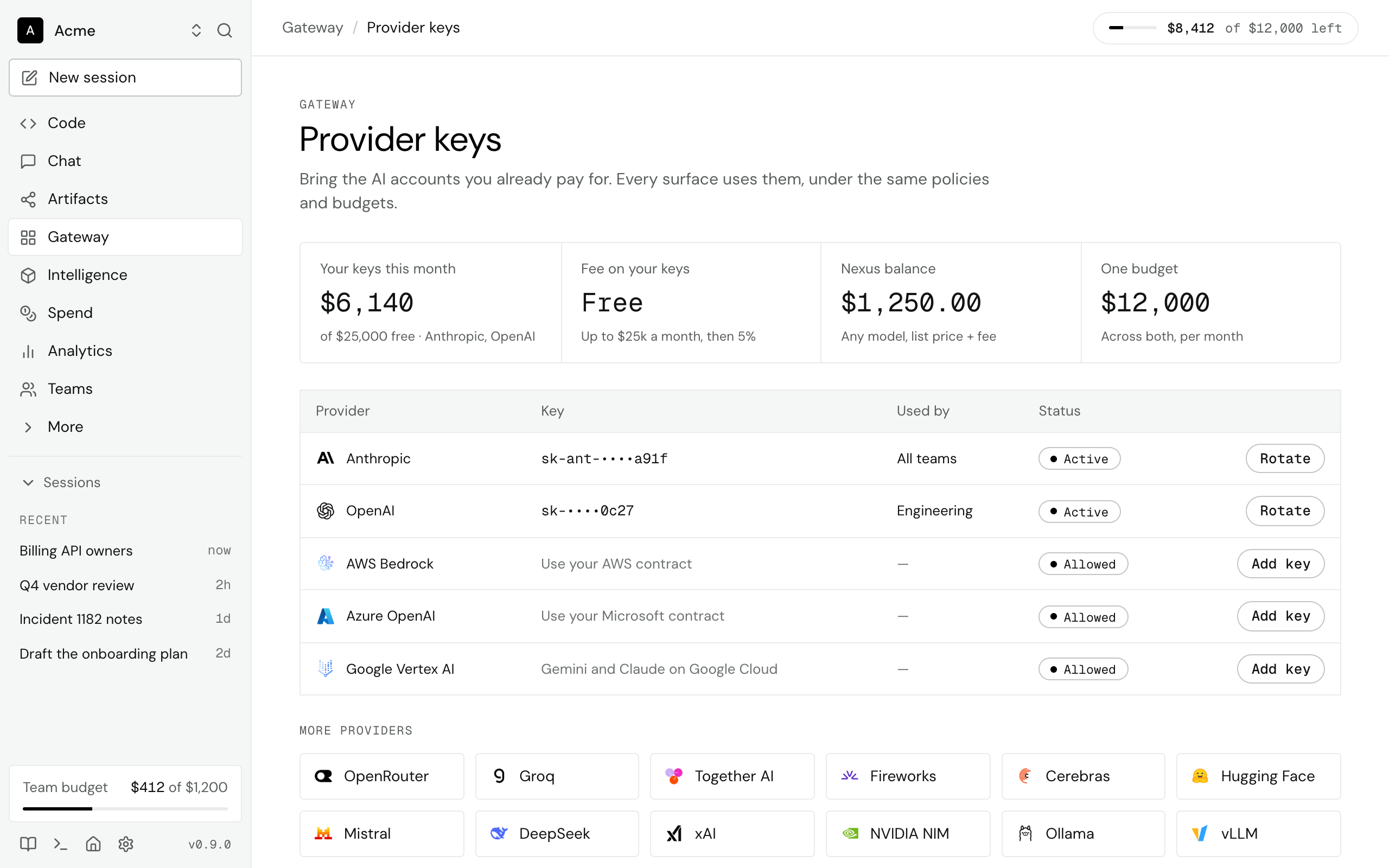
| Cost on top of models | Your keys free to $25k/mo, then 5% | No fee, plus hosting and your team’s time |
The real cost of running it yourself
The proxy is free; operating it is not. Someone owns upgrades, uptime, secrets, rate limits and on-call. For a platform team that already runs this kind of infrastructure, that is fine. For a company that wants AI for everyone, it is a project that never ends.
When LiteLLM is the right call
- You have a platform team and want full control of the code
- Your users are engineers calling an API
- You are happy to build the interfaces and controls yourself
When Nexus is
- You want everyone in the company on every model, in the tools they use
- You need budgets and rules that hold on every surface
- You would rather nobody be on call for the gateway, or you need it Private in your own cloud
 Nexus
 OpenRouter